



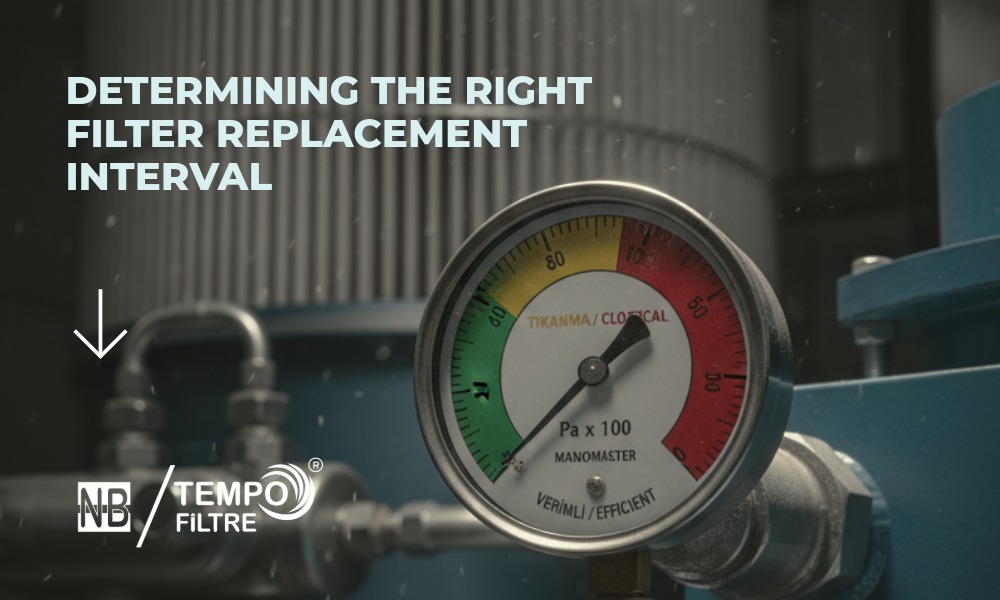
One of the most common mistakes in industrial facilities is planning filter replacements solely based on fixed schedules. But when should a filter actually be replaced in a hydraulic system or dust collection unit? Is replacing it every three months the right approach, or is it better to wait until performance indicators suggest replacement is necessary?
The answer depends on your operating conditions, contamination levels, system design, and filter type. In this article, we explore the key factors that determine filter replacement intervals and explain why condition-based monitoring often provides better results than relying solely on calendar schedules.
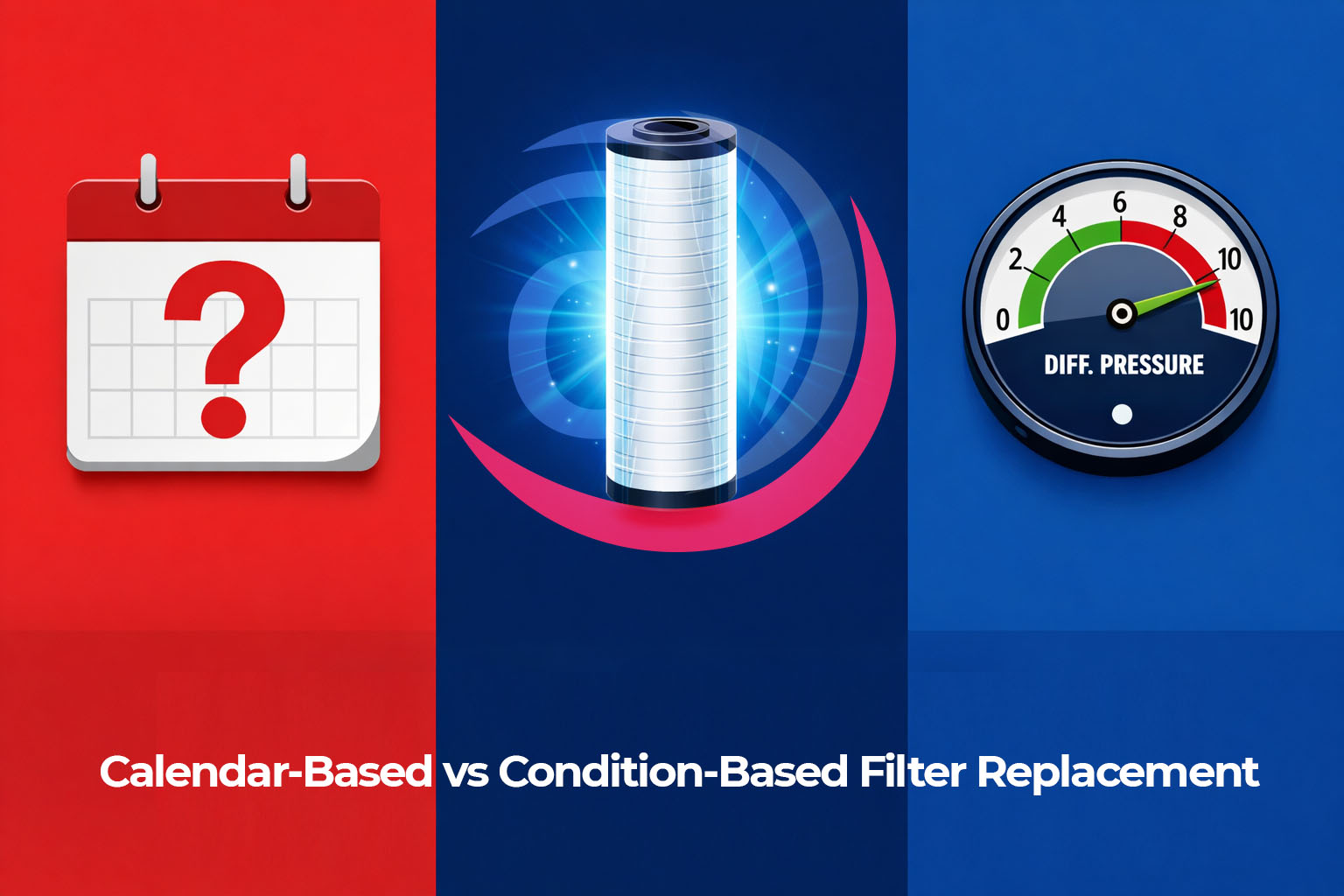
Why Calendar-Based Replacement Alone May Not Be Enough
Many facilities replace filters according to predefined schedules such as every three months or four times per year. However, relying solely on a calendar-based approach may not always deliver optimal results because it does not consider actual operating conditions.
Potential drawbacks include:
- Replacing filters before their service life is fully utilized
- Increased maintenance costs
- Risk of premature clogging in high-contamination environments
- Inconsistent maintenance efficiency across different applications
- Increased waste generation
Filter replacement intervals should be determined not only by maintenance schedules but also by operating conditions and performance indicators.
Four Critical Factors Affecting Filter Life
1. System Pressure and Flow Rate
In high-pressure hydraulic systems, particle contamination can pose greater risks to sensitive components such as pumps, valves, and servo systems.
Flow conditions significantly influence filter loading characteristics, and filtration performance may require closer monitoring under varying operating conditions.
2. Contamination Level of the Environment
Facilities operating in cement, foundry, mining, or heavy manufacturing environments often experience significantly higher particulate loads.
In powder coating applications, sticky particles may cause faster filter loading if the appropriate filter media is not selected. Specialized media such as e-PTFE membrane filters or antistatic filter materials may provide improved performance.
3. Operating Temperature and Fluid Characteristics
Elevated temperatures can affect fluid viscosity and system pressure losses. Therefore, filtration performance should always be evaluated according to actual operating conditions.
Sudden temperature fluctuations may negatively affect the performance and durability of certain filter media types.
4. Differential Pressure Monitoring
Differential pressure is one of the most important indicators used to assess filter loading conditions.
| Condition | Interpretation | Recommended Action |
|---|---|---|
| Low ΔP | Filter operating normally | Continue monitoring |
| Increasing ΔP | Filter loading is increasing | Increase inspection frequency |
| High ΔP | Pressure losses becoming significant | Plan replacement according to manufacturer recommendations |
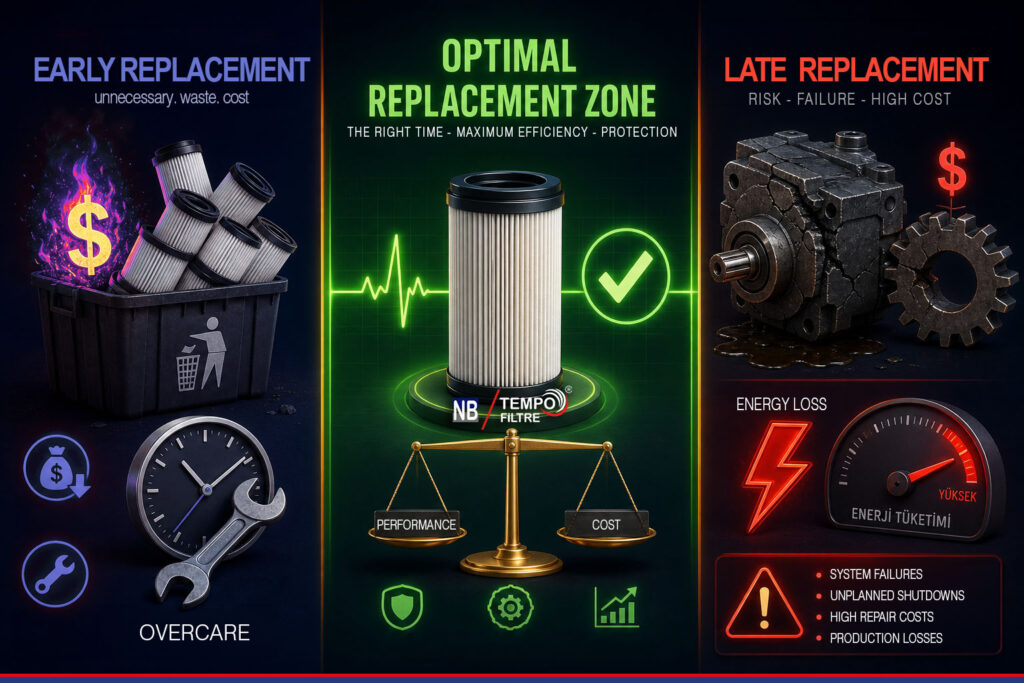
Risks of Replacing Filters Too Early or Too Late
Early Replacement
- Filter element may be replaced before reaching the end of its usable service life
- Higher maintenance costs
- Increased waste generation
- Unnecessary maintenance interventions
Delayed Replacement
- Increased contamination levels may lead to wear and performance degradation in system components
- Increased pressure loss may result in higher energy consumption
- Risk of unplanned downtime
- Equipment damage can result in costs significantly exceeding filter replacement expenses
Tempo Filtre’s Recommended Approach
In many industrial applications, condition-based monitoring can help manage filtration performance more effectively.
Recommended steps:
- Monitor differential pressure regularly.
- Record baseline differential pressure values.
- Consider the differential pressure limits specified in the filter element’s technical documentation.
- Schedule filter replacement when operating conditions indicate it is necessary.
- Maintain records to optimize maintenance planning over time.
Benefits include:
- Maximum utilization of filter service life
- Improved energy efficiency
- Reduced risk of component wear
- Better maintenance planning
- Fewer unexpected shutdowns
Technical Support from Tempo Filtre
Tempo Filtre provides more than filter elements. We support customers with:
- Filtration system assessment
- Filter media selection
- Differential pressure monitoring strategies
- Technical training and reporting
- Engineering support for custom applications
Conclusion
Filter replacement intervals should be determined based not only on maintenance schedules but also on actual system performance data.
Differential pressure measurement is one of the most important indicators for evaluating filtration performance and can significantly support maintenance planning.
By implementing a well-structured filtration strategy, companies can improve equipment reliability, reduce operating costs, and maximize filter service life.